Discover the ROSE Port, RoseVilla’s new solar-powered, earthquake-resistant resiliency hub designed to provide backup power, clean water, and EV Charging for Residents.
At RoseVilla Senior Living, preparing for the future is part of how we care for one another. We’re proud to introduce the ROSE Port, a new solar-powered, earthquake-resistant hub designed to support Residents and keep them connected during power outages, extreme weather, and other emergencies.
The ROSE Port (short for Resilient Operations and Sustainable Energy) combines renewable energy, emergency water, earthquake-resilient construction, and zero-emission support in a single purpose-built space on our Portland, Oregon, campus.
“This is the power of community in action,” said Glen Lewis, CEO of RoseVilla Senior Living. “Together, we’re caring for our people and our planet, creating a safe, resilient space where Residents can feel supported no matter what comes our way.”
What Is the ROSE Port?
The ROSE Port is a first-of-its-kind resilience hub in the Pacific Northwest’s senior living sector. It was built to operate independently when the grid goes down, whether from heat waves, ice storms, wildfire smoke, or seismic events.
Key features:
- Backup solar power with battery storage for charging phones and other small devices
- Emergency water supply from a 3,100-gallon rainwater capture and purification system
- Seismic design built to high earthquake safety standards
- Sustainable materials, including mass timber and repurposed structural elements
- Electric vehicle charging with four Level 1 EV chargers
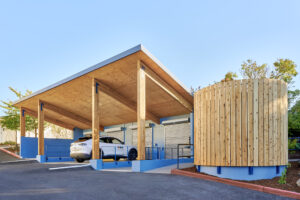
Image: ROSE Port photographed by Bill Purcell
Why the ROSE Port Matters for Residents
Extreme weather and power disruptions are becoming more common across the Pacific Northwest. The ROSE Port helps ensure RoseVilla Residents have:
- Reliable power during outages. Solar panels and battery storage keep essential devices powered, even if the wider community loses electricity.
- Clean, accessible water. Rainwater is collected, filtered, and UV-purified on site. In an emergency, the system can provide each Resident with a gallon of drinking water for about 8 days.
- A safe place to gather. Earthquake-resilient construction creates a secure space where neighbors can connect, charge devices, share updates, and support each other.
- Lower environmental impact. By using mass timber and repurposed materials, the ROSE Port reduces carbon emissions and aligns with RoseVilla’s sustainability values.
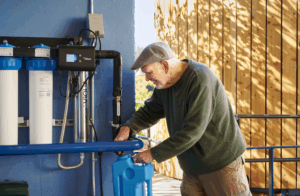
Image: Resident Ed using ROSE Port water filtration photographed by Bill Purcell
Part of RoseVilla’s Long-Term Climate Resilience Plan
The ROSE Port is the first of several planned resilience hubs within RoseVilla’s 25-year Resiliency and Sustainability Action Plan. This Resident-supported roadmap strengthens the entire campus across four pillars:
- Energy efficiency
- Water independence
- Structural and seismic resilience
- Community health and well-being
It joins other innovative initiatives on our 24-acre campus, including:
- Two Zero-Energy neighborhoods (The Oaks and Trillium Townhomes)
- Campus-wide greywater recycling through the ROSIE (Recycled Organic Stuff Is Everywhere) system
- Passive House–inspired design for better comfort and indoor air quality
- Resident-led environmental programs that make sustainable living part of everyday life at RoseVilla
Resident-Led Climate Action
Resilience and sustainability at RoseVilla are shared efforts. Two Resident groups play a key role:
- The Green Team: Promotes climate-conscious living, teaches sustainable practices, and collaborates with Portland-area senior living communities.
- Ready Force: Supports emergency preparedness through drills, education, neighbor-to-neighbor assistance, and the annual ROSE Refresh Party.
A Climate-Ready Future, Powered by Community
“The ROSE Port represents what it means to care for our people and our planet,” says Glen Lewis, CEO of RoseVilla Senior Living. “We’re not waiting for the next emergency—we’re preparing for it. This hub helps ensure our Residents have a safe, resilient, and sustainable future.”
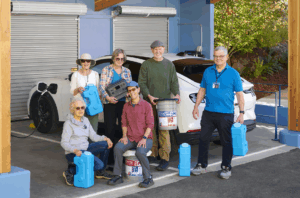
Image: ReadyForce Residents photographed by Bill Purcell
ROSE Port Frequently Asked Questions (FAQs)
What is the ROSE Port? The ROSE Port is RoseVilla’s new solar-powered, earthquake-resilient energy hub. Designed to operate independently during outages and extreme weather, it provides backup power, emergency water and EV charging stations.
What does “ROSE Port” stand for? ROSE stands for Resilient Operations and Sustainable Energy, reflecting the hub’s role in powering and protecting our community during emergencies.
Why did RoseVilla build the ROSE Port? To ensure Resident safety and connection during power outages and climate emergencies. The hub is a proactive investment in a climate-ready future.
How does the ROSE Port provide backup power? The hub is equipped with:
- A 17.82-kilowatt solar array
- A 30-kilowatt-hour battery and inverter system
This allows Residents to charge phones, small devices, mobility equipment, and essential electronics even when the grid is down.
Does the ROSE Port supply emergency water? Yes. A 3,100-gallon rainwater cistern collects, filters, and UV-purifies water on-site. In an emergency, it can supply up to 30 Residents with five gallons of clean water per day for three weeks.
Is the ROSE Port built to withstand earthquakes? Absolutely. It’s constructed to Risk Category 4 seismic standards, meaning the structure is designed to remain safe and functional after a major earthquake.
What sustainable materials were used in the ROSE Port? The hub incorporates:
- Mass timber (including mass plywood panels)
- FSC-certified glued laminated beams
- A repurposed foundation from the original on-site structure
- These choices reduce carbon emissions and support responsible forestry.
Does the ROSE Port offer EV charging? Yes. The hub includes four Level 1 electric vehicle chargers to support zero-emission transportation for Residents and team members.
How does the ROSE Port benefit Residents during emergencies? It provides:
- Reliable off-grid power
- Clean emergency water
- A safe, earthquake-resilient gathering place
- Connection and information sharing during outages peace of mind knowing the community is prepared
How does the ROSE Port fit into RoseVilla’s long-term resilience strategy? It is the first of several planned resilience hubs under RoseVilla’s 25-Year Resiliency and Sustainability Action Plan, which focuses on:
- Energy security
- Water independence
- Structural and seismic resilience
- Community health and well-being
Who leads climate preparedness efforts at RoseVilla? Two Resident groups play a key role:
- The Green Team promotes sustainable living and shares best practices with nearby senior communities.
- Ready Force supports emergency preparedness through drills, education, and neighbor-to-neighbor assistance.
What does RoseVilla leadership say about the ROSE Port? RoseVilla CEO Glen Lewis shares:
“The ROSE Port represents what it means to care deeply for our people and our planet. By investing in resilient infrastructure, we’re prioritizing the health, safety, and well-being of our entire community. RoseVilla isn’t waiting to respond to climate-related emergencies; we’re preparing for them.”
“This is the power of community in action. Together, we’re caring for our people and our planet, creating a safe, resilient space where Residents can feel supported no matter what comes our way.”